Driving in Portugal: Rules, Tips & Toll Roads
Essential driving tips for Portugal — speed limits, toll roads, parking rules and what to watch out for on Portuguese roads.
Driving in Portugal: Rules, Tips & Toll Roads
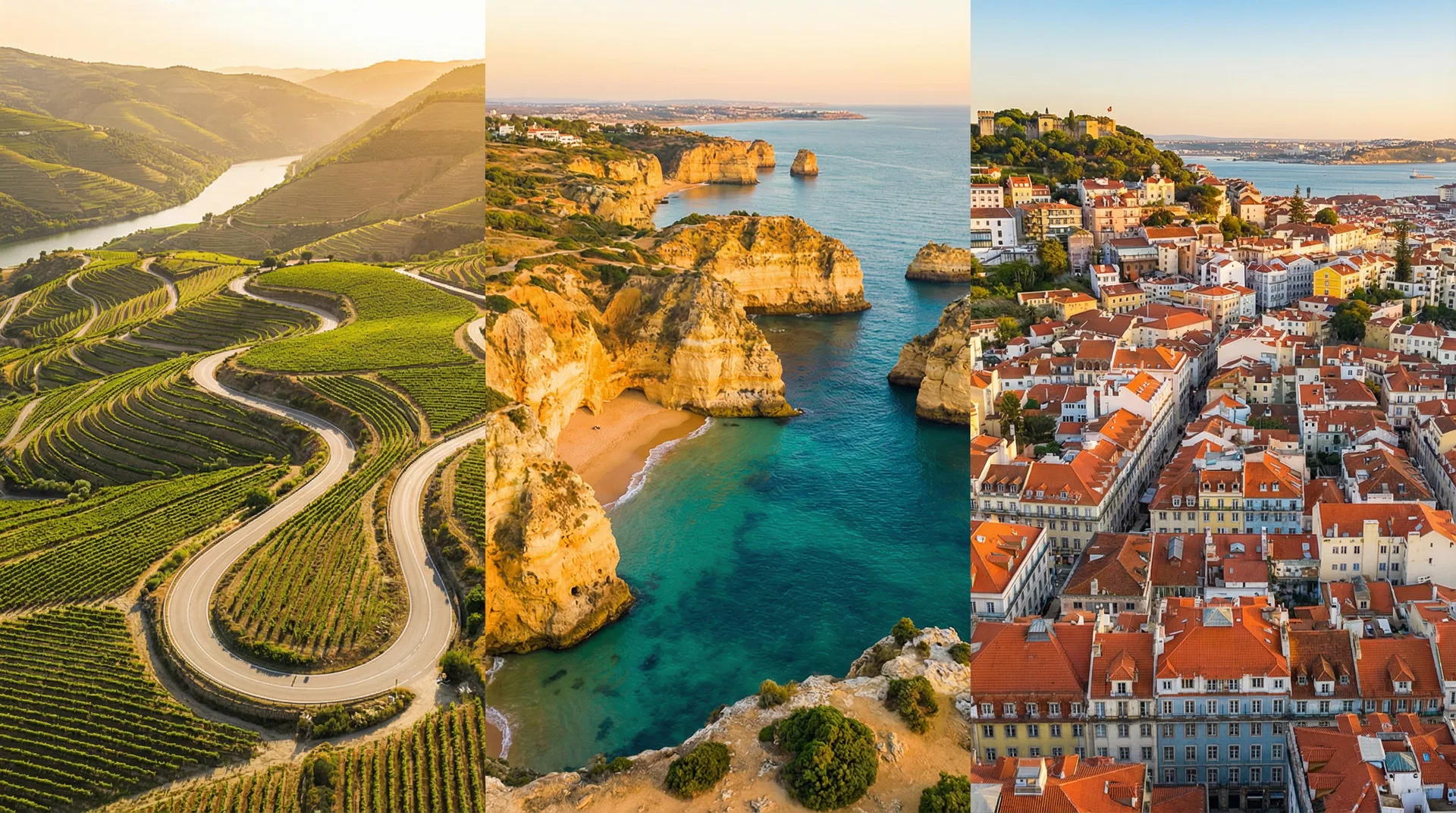
Portugal is one of Europe's most rewarding countries to explore by car. From the sun-drenched Algarve coast to the dramatic valleys of the Douro and the volcanic landscapes of the Azores, the road network is modern, well-maintained and surprisingly easy to navigate. This guide covers everything you need to know before you get behind the wheel.
Which Side of the Road?
In Portugal, as in most of mainland Europe, you drive on the right-hand side of the road. Overtaking is done on the left. If you are arriving from the UK or Ireland, take a few minutes to consciously adjust — especially at roundabouts and when pulling out of car parks.
Speed Limits
Speed limits in Portugal are clearly signposted and strictly enforced by fixed and mobile cameras.
| Road Type | Speed Limit |
|---|---|
| Motorways (autoestradas) | 120 km/h |
| Dual carriageways | 100 km/h |
| National roads (outside towns) | 90 km/h |
| Urban areas | 50 km/h |
| Residential zones | 20–30 km/h |
Fines for speeding are issued on the spot and can be substantial. Foreign-registered vehicles are not exempt.
Toll Roads
Portugal has an extensive network of toll motorways (autoestradas), identified by the letter A followed by a number (e.g., A1, A2, A22).
Electronic Tolls (Via Verde)
Many Portuguese motorways use an electronic-only toll system — there are no toll booths, and payment is made via transponder or by registering your vehicle's number plate online. When renting a car, ask your rental company about the toll payment options:
- Via Verde transponder — the most convenient option, charged to your rental agreement
- EASYToll — register your credit card and number plate at easytoll.pt before your trip
- PayToll — pay tolls retroactively within 5 days at CTT post offices or online
Driving through an electronic toll gantry without a valid payment method will result in a fine.
The A22 — Free Algarve Motorway
The A22 Via do Infante (Algarve motorway) is free of charge for most of its length, making it the easiest way to travel between Faro, Portimão and the western Algarve.
Driving Licence Requirements
- EU/EEA licences are fully valid in Portugal with no additional documentation required.
- UK licences (post-Brexit) are accepted for short stays (up to 185 days).
- Non-EU licences — an International Driving Permit (IDP) is recommended alongside your national licence.
- Minimum age to rent a car is typically 21 years, though some companies require 23 or 25 for certain vehicle categories.
Compulsory Equipment
By law, every vehicle in Portugal must carry a warning triangle, a reflective safety vest and a spare tyre or tyre repair kit. Rental cars are generally equipped with these items, but always verify before departure.
Alcohol Limits
The legal blood alcohol limit in Portugal is 0.5 g/L (0.05%). For drivers with less than 3 years of experience, the limit is 0.2 g/L. Penalties for drink-driving are severe and include on-the-spot fines, licence suspension and vehicle impoundment.
Mobile Phones
Using a handheld mobile phone while driving is strictly prohibited. Hands-free systems are permitted. Fines start at €250.
Parking
Blue zones (zonas azuis) require a parking disc or ticket from a nearby machine. In Lisbon and Porto, parking apps such as ePark and Emel are widely used and accept international credit cards. Avoid parking on yellow lines or in front of dropped kerbs — towing is common in city centres.
Emergency Numbers
| Service | Number |
|---|---|
| Emergency (all services) | 112 |
| Breakdown assistance | Contact your rental company |
Frequently Asked Questions
Do I need a vignette to drive in Portugal?
No. Portugal does not use a vignette system. Tolls are paid per journey on specific roads.
Can I drive a Portuguese rental car into Spain?
Most rental companies permit cross-border travel to Spain with prior notification. Always confirm with your rental provider before crossing the border.
What should I do if I have an accident?
Exchange details with the other driver, complete a European Accident Statement if available, and contact your rental company immediately. Call 112 if there are injuries.
Ready to explore Portugal by car? Compare hundreds of deals across all airports and cities — and find the best price for your trip.
Compare Car Rental Deals in Portugal →