Best Things to Do in the Azores by Car
The top volcanic craters, thermal pools and dramatic coastlines in the Azores that are best explored by car.
Best Things to Do in the Azores by Car (2025 Guide)
The Azores archipelago is one of Europe's most extraordinary destinations — nine volcanic islands rising from the mid-Atlantic, each with its own dramatic character. While São Miguel is the most visited, the islands of Faial, Pico, Flores, and Terceira each offer unforgettable experiences. The single best way to explore them is with a rental car. Public transport on the islands is limited, and the most breathtaking viewpoints, crater lakes, and geothermal valleys are only reachable by road. This guide covers the best things to do in the Azores by car, from the iconic twin lakes of Sete Cidades to the whale-watching waters off Pico Island.
Why You Need a Car in the Azores
The Azores is not a destination where you can rely on buses or taxis. On São Miguel alone, the main island, the distance between Ponta Delgada and the Nordeste cliffs is over 50 km, and the most spectacular stops — Sete Cidades, Furnas, Lagoa do Fogo — are spread across the island's interior. A rental car gives you the freedom to arrive at viewpoints before the tour buses, stop at roadside hydrangea fields, and change plans when the weather shifts (which it does, often and dramatically).
Renting a car at Ponta Delgada Airport (PDL) is straightforward, with all major providers represented. For the best rates, compare options through GooRentalCars before you travel — prices vary significantly by season and booking lead time.
São Miguel: The Green Island
São Miguel is the largest island and the one most visitors base themselves on. Its interior is dominated by volcanic calderas, crater lakes, and geothermal activity that makes the landscape feel almost otherworldly.
Sete Cidades: The Twin Lakes
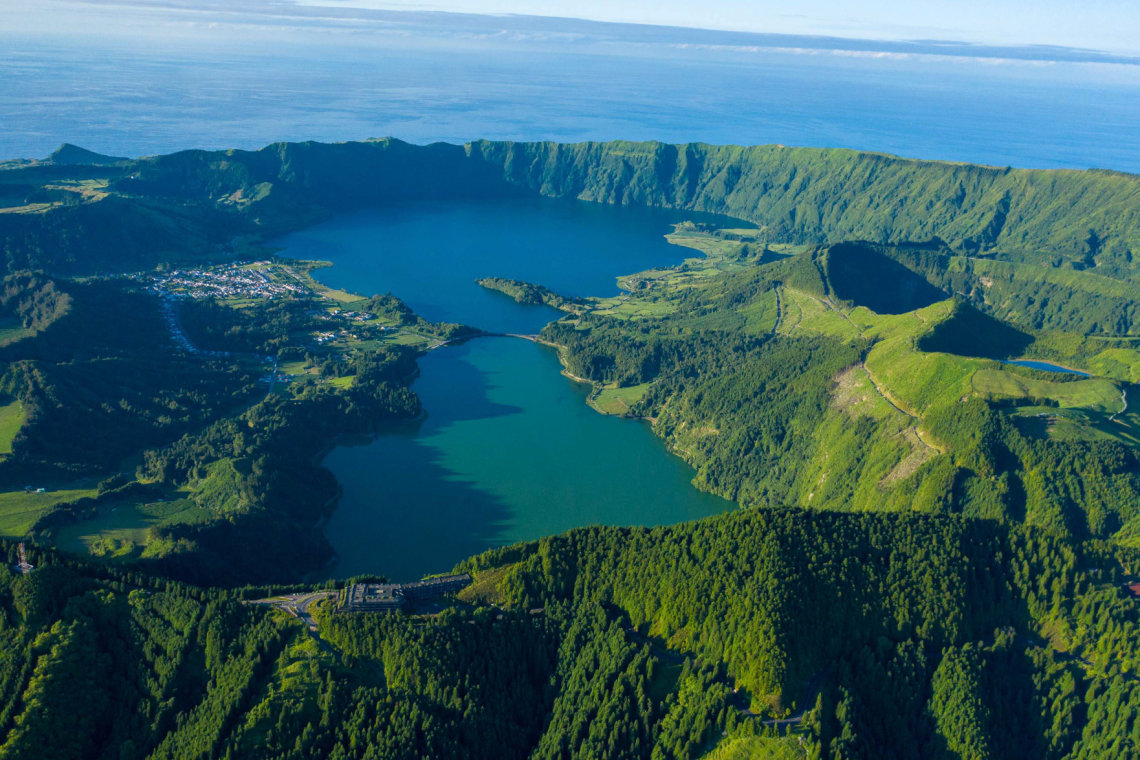
The Sete Cidades caldera is the most iconic sight in the Azores. Two lakes — Lagoa Azul and Lagoa Verde — fill the crater, separated by a narrow bridge. The classic viewpoint is Vista do Rei, reached by a winding road from the village of Sete Cidades. Arrive early in the morning for the best light and to beat the tour groups. The drive around the crater rim takes about 45 minutes and offers constantly changing perspectives.
Furnas: Geothermal Valley and Terra Nostra Park
The Furnas valley is where the Azores' volcanic energy is most visible. Bubbling mud pools, fumaroles, and hot springs dot the landscape around the village. The highlight is Terra Nostra Park, a botanical garden built around a large thermal pool where you can swim in iron-rich, rust-coloured water at 39°C. Don't leave without trying the Cozido das Furnas — a traditional stew slow-cooked underground by volcanic heat, served at restaurants around the village.
Lagoa do Fogo: The Lake of Fire
Lagoa do Fogo (Lake of Fire) sits in a protected natural reserve in the centre of São Miguel. The drive to the viewpoint is spectacular, with the lake appearing suddenly below you as you crest the ridge. On clear days, the turquoise water against the green crater walls is one of the most beautiful sights in Portugal. A hiking trail descends to the lake shore, where a small black-sand beach awaits.
Caldeira Velha Thermal Pools
The Caldeira Velha thermal pools, on the slopes of Fogo volcano, offer a unique bathing experience in warm, iron-rich waters amidst lush vegetation. This natural monument features several hot springs, including a waterfall with a thermal pool. The scenic drive leads to a parking area, with a short walk to the pools. Arrive early or late to avoid crowds.
Nordeste: Cliffs and Flower Gardens
The Nordeste region, at São Miguel's eastern tip, is the island's quietest and most atmospheric corner. Known as the "flower garden of the Azores," its clifftop roads are lined with hydrangeas, agapanthus, and azaleas in summer. Stop at Ponta do Sossego and Ponta da Madrugada for panoramic views over the Atlantic. The winding coastal road between these two viewpoints is one of the finest drives in the Azores.
Beyond São Miguel: Island Hopping by Ferry and Car
One of the great pleasures of the Azores is combining islands. Inter-island ferries operate in summer, and you can take your rental car on the ferry between Faial, Pico, and São Jorge (the so-called "Triangle Islands").
Pico: Portugal's Highest Mountain and Whale Watching
Pico Island is dominated by its namesake volcano — Mount Pico, at 2,351 metres, is Portugal's highest peak. The ascent is a challenging 7-hour hike requiring a permit, but even from the road, the mountain is awe-inspiring. Pico is also one of the world's best destinations for whale watching: sperm whales, blue whales, and dolphins are regularly spotted in the waters around the island. The island's vineyards, grown in UNESCO-listed lava fields, produce a unique white wine worth seeking out.
Faial: The Blue Island
Faial is known as the "Blue Island" for its endless fields of hydrangeas. The island's main attraction is the Caldeira, a volcanic crater 2 km wide and 400 metres deep, accessible by a circular hiking trail. The marina at Horta is a legendary stop for transatlantic sailors, its walls covered in colourful murals painted by crews from every nation.
Practical Driving Tips for the Azores
Roads in the Azores are generally well-maintained, but the volcanic terrain means steep gradients, sharp bends, and frequent fog at altitude. Speed limits are 50 km/h in urban areas and 90 km/h on rural roads. Fuel stations are plentiful in Ponta Delgada and Ribeira Grande but sparse in the interior — fill up before heading into the mountains. Parking at major viewpoints fills up quickly in summer; arrive before 9am for the best spots. Always carry a light jacket as weather changes rapidly, especially at higher elevations.
Ready to explore the Azores? Compare car rental prices at Ponta Delgada Airport and find the best deal for your trip. Compare Prices on GooRentalCars →
Related Articles
- Rent a Car in the Azores: Complete Guide
- Car Hire at Azores Airport: Everything You Need to Know
- Driving in the Azores: Tips and Road Rules
- Best Places to Visit in the Azores
Frequently Asked Questions
Do I need a car in the Azores?
Yes, a car is strongly recommended for exploring the Azores. Public transport on the islands is limited and does not reach most of the major natural attractions. The crater lakes, geothermal valleys, and coastal viewpoints are all best accessed by car.
Which island is best to visit in the Azores?
São Miguel is the most accessible and varied island, with the most car rental options and the widest range of attractions. For a more remote experience, Flores or Corvo are extraordinary. The Triangle Islands (Faial, Pico, São Jorge) are ideal for combining by ferry.
Can I take a rental car on the ferry between islands?
Yes, inter-island ferries operated by Atlânticoline accept cars in summer. The ferry between Faial, Pico, and São Jorge is the most popular route. Check availability in advance as car spaces are limited.
How long do I need to explore São Miguel by car?
Three to four days is enough to see the main highlights of São Miguel by car. A week allows you to explore at a more relaxed pace and include day trips to the quieter parts of the island.
What is the best viewpoint in the Azores?
Vista do Rei above Sete Cidades is widely considered the best viewpoint in the Azores. The Miradouro da Boca do Inferno on Faial and the viewpoints along the Nordeste coast on São Miguel are also exceptional.
Is driving in the Azores difficult?
Driving in the Azores is manageable for most drivers, but the mountain roads can be steep and narrow. An automatic transmission makes hill starts easier. The main roads are well-maintained and clearly signposted.