Tavira Day Trip from Faro by Car: Eastern Algarve Guide
Discover how to plan a scenic day trip from Faro to Tavira by rental car, exploring the historic eastern Algarve, salt pans, and coastal nature reserves.
Tavira Day Trip from Faro by Car: Exploring the Eastern Algarve
While many visitors to southern Portugal remain fixated on the bustling resort towns of the central and western coast, the eastern Algarve holds a quieter, profoundly authentic charm that rewards independent exploration. Embarking on a journey from Faro to Tavira by car opens up a landscape defined by rolling agricultural hills, traditional whitewashed architecture, tranquil lagoons, and stretches of golden sand that feel remarkably untouched by mass tourism. Driving across this region allows you to set your own pace, detour through sleepy riverside villages, and immerse yourself in a side of Portuguese culture where time seems to slow down. To truly appreciate this scenic transition, having reliable personal transport is indispensable, turning what would otherwise be a rigid bus schedule into a fluid, customized voyage of discovery across the eastern horizon.
Why a Rental Car Transforms Your Journey to the Eastern Algarve
Public transportation networks connect the major urban nodes of the Algarve, yet they inevitably restrict your freedom when you wish to explore rural hinterlands, secluded viewpoints, or coastal nature reserves on a whim. When you organize your transport through a trusted provider like GooRentalCars, you secure the freedom to depart at dawn, linger over lunch in a hidden square, or chase the sunset along coastal viewpoints without watching the clock. The coastal strip between Faro and Tavira is dotted with subtle points of interest that lack major bus stops but offer unforgettable experiences for motorists willing to venture off the beaten path. Whether you pick up your vehicle directly upon arrival or coordinate your Faro car hire itinerary after exploring the regional capital, having a car transforms a simple transfer into an immersive road trip.
Compare Faro car rental deals → Unlock total freedom across the Algarve with flexible pick-up options and fully transparent vehicle choices tailored to your exact travel schedule.
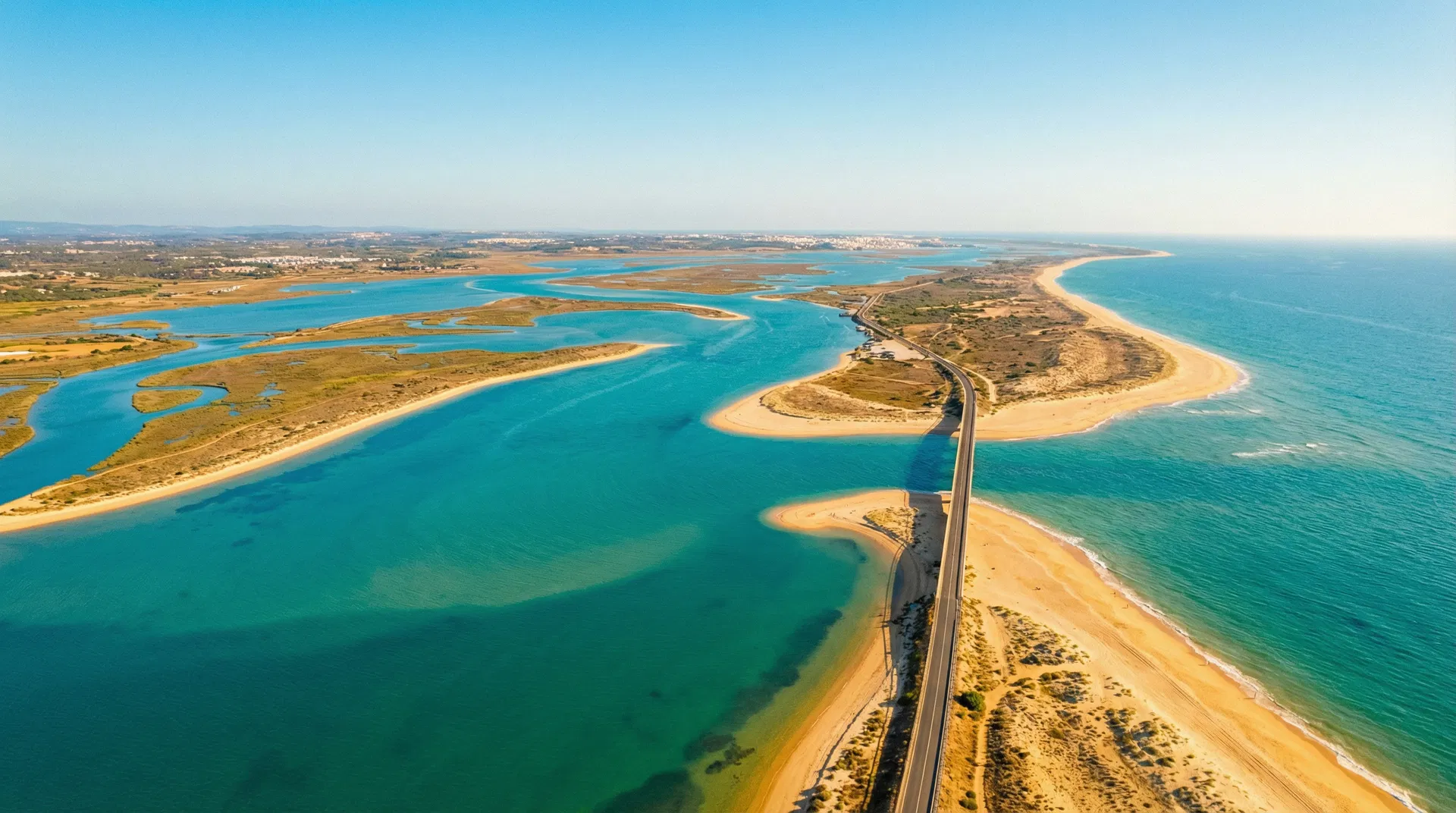
As you leave Faro behind, the road unfolds across the diverse ecosystems of the Ria Formosa Natural Park, where saltwater marshes blend seamlessly with mudflats and barrier islands. Without a vehicle, stopping to observe migratory birds or walking along quiet embankment roads becomes logistically cumbersome. A rental car gives you the agility to pull over safely at designated viewpoints, inspect local salt pans, and appreciate how geography shapes daily life in this corner of the Iberian Peninsula. Furthermore, traveling with your own vehicle ensures that your luggage, beach gear, and camera equipment remain secure and accessible throughout the day, eliminating the physical strain of carrying heavy bags through train stations or bus terminals under the Mediterranean sun.
Choosing Your Route: A22 Highway Versus the Scenic EN125
When planning your departure from Faro toward Tavira, you will generally evaluate two primary arteries, each offering a distinct driving experience and travel dynamic. The A22 motorway serves as the swift, modern highway cutting inland across the region, allowing drivers to bypass local traffic and cover the distance between the two cities in roughly thirty minutes. This route is ideal if your priority is maximizing your time on foot in Tavira and minimizing transit duration, especially during peak morning hours when urban commuters are on the move. However, while efficient, the highway runs slightly inland and offers limited visual engagement with the immediate coastal landscape, functioning primarily as a utilitarian conduit rather than a scenic drive.
In contrast, taking the traditional EN125 road or the network of secondary municipal roads winding closer to the coast provides an entirely different atmosphere. The EN125 guides you through suburban fringes, bustling market towns, and agricultural belts where fig, almond, and orange orchards line the tarmac. While speed limits are lower and traffic congestion can occasionally occur near major intersections, this route invites spontaneous exploration. You might spot a roadside pottery workshop, a family-run bakery selling artisanal pastries, or a historic chapel that invites a brief, unplanned stop. Many seasoned travelers prefer taking the scenic regional route on the outward journey to soak in the local ambiance, and utilizing the A22 highway for a relaxed, efficient return drive to Faro as evening approaches.
Morning Exploration: Historic Architecture and Riverfront Charm in Tavira
Arriving in Tavira during the morning hours reveals a city bathed in soft golden light, reflecting off the calm waters of the Gilão River that bisects the urban fabric. Tavira is frequently celebrated as one of the most picturesque settlements in the Algarve, largely due to its remarkable concentration of architectural heritage spanning Roman, Moorish, and Renaissance eras. Parking your vehicle in one of the municipal lots situated just outside the historic center allows you to begin your walking tour immediately without the stress of navigating narrow, cobblestone lanes designed centuries before automobiles existed. Walking across the iconic Roman Bridge, locally known as Ponte Romana, sets the tone for an unhurried morning spent wandering through labyrinthine alleys flanked by traditional tiled facades and ironwork balconies.
Compare Faro car rental deals → Secure the ideal vehicle for exploring Tavira's historic streets and coastal hideaways with instant online comparisons and zero hidden fees.
From the riverbanks, you can ascend gradually toward the ruins of Tavira Castle, an ancient fortification offering sweeping panoramic views over the terracotta rooftops, church spires, and the distant salt marshes of the estuary. The city boasts over thirty historic churches, among which the Church of Santa Maria do Castelo holds particular significance due to its Gothic portal and the tombs of medieval knights. Descending from the castle grounds, a visit to the Municipal Market provides a sensory glimpse into local commerce, where vendors display fresh catches from the Atlantic alongside regional fruits, vegetables, and artisanal cheeses. Taking time to sit at a riverside café for a traditional pastel de nata and an espresso allows you to absorb the tranquil rhythm of local life before the afternoon warmth peaks.
Afternoon Coastal Extensions: Salt Pans, Lagoons, and Praia de Tavira
After spending your morning immersed in Tavira's architectural heritage, your rental car enables a seamless transition toward the coastal ecosystems and barrier islands that define the eastern Algarve's natural identity. Driving just a few kilometers south of the city center brings you to the quays of Santa Luzia or Cabanas de Tavira, traditional fishing villages renowned for octopus harvesting and tranquil waterfront promenades. From these points, short passenger ferry crossings take you across the gentle waters of the lagoon to Ilha de Tavira, a pristine barrier island featuring miles of uninterrupted white sand and refreshing Atlantic surf. Because you are traveling independently, you can easily adjust your schedule to spend as much or as little time on the coast as weather and personal preference dictate.
Alternatively, motorists interested in industrial heritage and ornithology can drive out toward the salt pans surrounding the Gilão estuary, where centuries-old evaporation ponds create striking geometric patterns across the landscape. These wetlands serve as vital feeding and nesting grounds for numerous migratory bird species, including elegant greater flamingos, stilt-walkers, and herons. Having a vehicle gives you the freedom to explore these quiet rural tracks at your own pace, stopping wherever lighting and wildlife activity create compelling photographic opportunities. For a broader understanding of how regional landscapes interconnect, reviewing our detailed overview on best places to visit in Faro and the Algarve provides wonderful inspiration for expanding your itinerary beyond a single day trip.
Practical Driving, Navigation, and Parking Tips in Tavira
Navigating the transition from a larger urban hub like Faro to historic eastern towns requires a moderate degree of preparation to ensure a smooth, stress-free excursion. Portuguese road rules are aligned with standard European Union regulations, requiring the mandatory use of seat belts, strict adherence to speed limits, and a zero-tolerance policy regarding mobile phone usage while operating a vehicle. When approaching Tavira, pay close attention to local signage designating pedestrian-only zones in the historic core, as entering these restricted areas can result in fines and unnecessary complications. Utilizing a reliable digital navigation app mounted securely on your dashboard will help you bypass unexpected road closures and guide you directly to designated public parking facilities located on the periphery of the old town.
Parking options in Tavira generally include large open-air municipal lots situated along the riverbanks and near the main market buildings, many of which offer affordable daily rates or free parking depending on the specific zone. Arriving before mid-morning significantly increases your chances of securing a convenient spot within a short walking distance of the central sights. If you intend to utilize the A22 highway for any portion of your journey, ensure your rental vehicle is equipped with an electronic toll collection device or familiarize yourself with post-payment procedures to keep your travel administration entirely hassle-free. For comprehensive advice on vehicle operation, safety standards, and regional nuances, consulting our guide on driving in Faro and the Algarve tips equips you with all the practical knowledge needed for a confident road trip.
Crafting Your Complete Eastern Algarve Itinerary
Designing a successful day trip from Faro to Tavira involves balancing structured sightseeing with generous margins for spontaneous discovery, ensuring your journey feels like a genuine holiday rather than a rushed checklist. Begin your morning with an early departure from Faro, taking advantage of lighter traffic conditions as you travel eastward past the verdant wetlands of the Ria Formosa. If you wish to deepen your understanding of the regional starting point before you set off, our comprehensive resource on rent a car in Faro complete guide offers invaluable logistical insights. Upon reaching Tavira, dedicate your morning hours to exploring the historic center, crossing the ancient bridge, and visiting the hilltop castle before the midday sun reaches its zenith.
Following a leisurely lunch featuring regional seafood specialties at a local tavern, dedicate your afternoon to exploring the surrounding natural attractions, whether that involves taking a ferry to the island beaches or driving out toward the tranquil salt pans. As the afternoon transitions into evening, consider taking the scenic coastal road back toward Faro, allowing you to catch the golden hour light illuminating the marshlands and fishing ports. Travelers arriving by air can seamlessly coordinate their transport by reviewing our guide on car hire at Faro airport, which details efficient pick-up procedures for arriving passengers. To ensure your wider regional explorations are equally seamless, our guide on Ria Formosa drive from Faro highlights additional coastal routes that perfectly complement an eastern Algarve adventure. For official tourism policies, regional conservation updates, and cultural event calendars, you can also consult the Official Tourism Portal of Portugal.
Compare Faro car rental deals → Plan your eastern Algarve adventure today with GooRentalCars and enjoy transparent pricing, exceptional vehicles, and dedicated customer support.
Related Articles
To further assist with your travel planning across the region, explore our related guides including the Rent a Car Faro Complete Guide, the essential overview on Car Hire Faro Airport, recommendations on the Best Places to Visit Faro Algarve, scenic inspiration from the Ria Formosa Drive from Faro, and practical advice detailed in Driving in Faro Algarve Tips.
FAQ
How long is the drive from Faro to Tavira by car?
The drive between Faro and Tavira along the EN125 or A22 highway takes approximately thirty to forty minutes depending on traffic and your exact starting point.
Is it easy to park in Tavira during a day trip?
Tavira offers several municipal parking areas near the riverfront and historical center, though arriving earlier in the morning provides the best selection of spots.
What are the main highlights to see on a Tavira day trip?
Key highlights include the Roman Bridge, Tavira Castle, the municipal market, the historic churches, and nearby Ilha de Tavira beaches accessed via ferry.
Should I take the A22 highway or the scenic EN125 road?
The A22 is faster for direct transit, while the EN125 and secondary coastal roads offer a more scenic glimpse into local towns, agricultural fields, and natural landscapes.
Do I need an international driving permit to rent a car in Faro?
Most visitors with a valid EU or UK driver's license do not require an international driving permit, though non-EU licenses should verify specific rental requirements beforehand.